
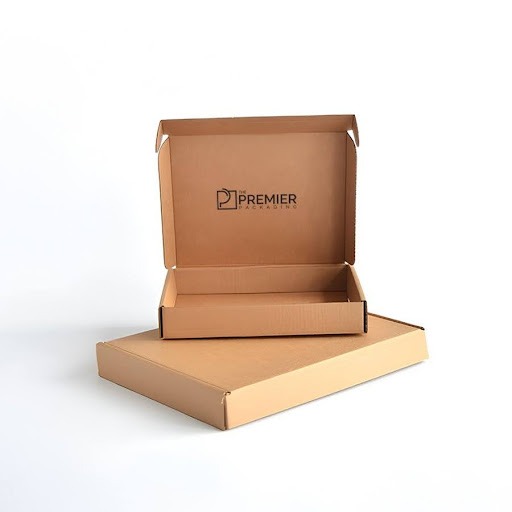
There is something that every business owner learns the hard way. The last touch point a customer comes into contact with your brand is not when they click “buy. It’s not even the time they receive the confirmation email. It is when they are holding the package in their hands and rip it open and they either feel that it’s worth what they paid for or it’s not.
If that moment is low, annoying or forgettable, that is a loss. Not only for this purchase. For each additional purchase they may have made in the future. And worse you have lost everyone they tell about the experience.
This is something I’ve seen happen with a dozen small to midsize brands. Beautiful products. Smart marketing. Competitive prices. Then a plain white corrugated box appears at the door of the customer, taped shut with packing tape, with no insert and a faint warehouse floor smell. The customer opens it and shrugs and it’s just another day at the office. They don’t post a picture. They do not post a positive rating. They come back no more. That shrug is the sound of a business dying, little by little, from a thousand of small disappointments.
The Math of Lost Customers
There is the hard maths. The cost of acquiring a new customer is 5-7 times that of retaining an old one. By increasing customer retention by 5%, you can improve profits by 25% to 95%. And the one most important factor in determining whether or not a first-time home buyer will be a repeat home buyer? Their unboxing experience.
Not the quality of the product. Not only the speed of the shipping. Filling the box is like opening the box.
If your packaging is “generic”, your message is “generic”: “We didn’t think about you.” If your packaging is customized, if it fits the product like a perfect fit, if it’s opened with purpose, if it catches the customer’s attention, or if it makes the customer smile or feel a certain way, then your message becomes entirely different: “We thought of everything. You are important. Customers notice. They always notice.
What Custom Retail Packaging Actually Does
Be more specific, as “custom packaging” is one of those terms that sounds overly expensive and ambiguous. In reality, there are three tangible impacts of retail box
The box is first of all for the product. No more rattling. There’s no more extra corner crushing. No more of that annoying crap, like all the clutter in those plastic air pillows. The product is placed in a Foam tray cut to a specific shape, a molded pulp insert or a cardboard cradle precisely folded. The product is not moving when the customer opens the box. It is presented.
Secondly, the box represents your identity. Your colours, your typography, your brand voice, your logo. Not a standard “Thank you” sticker on a brown box. The exterior of the box is often printed with the brand name, and sometimes the interior also. You will be easily recognized by a customer when they see 10 packages on their front porch because you look just like them.
Thirdly, the box has a story to tell. Perhaps it’s your materials that tell the story. Perhaps it’s the tale of your founding father. Perhaps it’s just the care that was put into folding the tissue paper, the care that was involved in picking out that ribbon, the care that went into putting that custom sticker on the box. Details are a home for stories. Details reside in packaging.
The Hidden Costs of Staying Generic
Some business owners are afraid to use custom packaging due to the initial expense. I get that kind of hesitation. But, let me tell you what a generic package actually costs.
It comes at a cost of social proof. Every video shot and not uploaded to YouTube, every photo taken and not uploaded to Flickr, every tag created and not shared via Twitter that is free advertising you have paid for, but never collected.
It costs you what you think is valuable. A 50productina50productina2 custom box is like a 70product.A70product.A50 product is felt like 0.50plainboxfeelslikea30 product. You’re missing out on money with each and every sale.
You lose money on returns. If something you’re shipping breaks due to moving around in a too large container, you have to ship it back, and then you lose the customer’s trust. Display retail Packaging that fits the product right means damage is significantly minimized.
It costs you differentiation. There are thousands of brands that offer similar products. The bulk of them are boxed in a similar fashion, all of which is plain. It is the ones who refuse to blend in, who are the ones who have grown.
Where to Start Without Overwhelming Your Budget
Don’t have to invest $10,000 for the first order of packaging! A practical strategy for small business:
Start with one size of stock box that is the size for your most popular product. Order a short run with custom printing on the outside (250 – 500 pieces). Simplify your design with your logo, a brand color and one-sentence promise. Place a paper towel inside and wrap with custom tissue. That tissue paper is pennies a piece, but adds a moment of discovery for the customer when they open the box.
After demonstrating the concept (improved review scores, additional social tagging, repeat orders), move to interior printing and custom inserts, and multiple sizes. Expand packaging as you grow your income. It’s not a flawless package any day; it’s a successful package any day. It will have to be a personal one.
A Final Word
The businesses that make it over the next 5 years will not be the cheapest. They’re going to be the ones that will make customers feel something. Packaging is not a cost item. It is a handshake. It’s the experience that occurs once the transaction takes place. This is what makes it magic and its urgency.
FAQ
Are retail boxes worth buying?
Absolutely they are both product presentation enhancers and they may improve customer numbers. They also help to safeguard products and create brand trust.
How much does it cost for custom packaging?
The costs depend on the size, material and design. Box prices can begin low, and they are even higher for premium boxes.
Are custom shipping boxes worth it?
Yes, they do protect products whilst delivery and advertise your brand. They also provide a more pleasant unboxing experience.
What are the different types of custom packaging?
They come in a variety of shapes and sizes, such as rigid boxes, corrugated boxes, folding cartons, and mailer boxes. They are each suitable to different products and requirements.